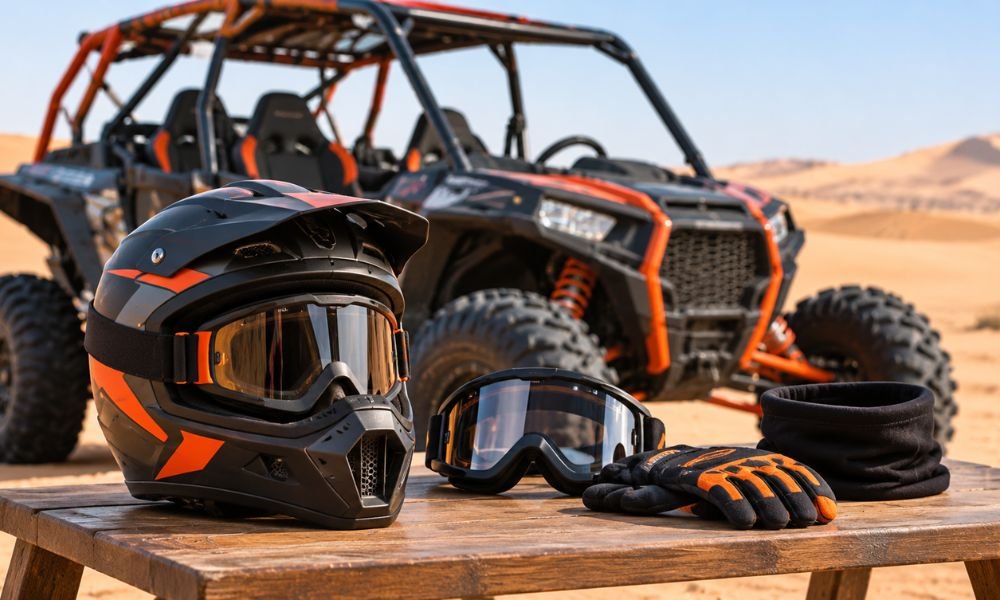
You can usually leave the main riding kit to the tour team. A dune buggy tour in Dubai typically provides the buggy, a helmet and protective goggles, with a seat belt or harness fitted to the vehicle. Gloves may also be supplied, while clothing, footwear and personal sun protection are usually yours to bring.
The exact dune buggy tour equipment in Dubai varies by package and vehicle. A named equipment list is more useful than “all gear included,” especially if you wear glasses, need a particular size or are travelling with children.
What Equipment Should You Expect at the Riding Base?
There are two parts to the kit: equipment you wear and equipment built into the buggy. These five items cover the main differences.
1. A Helmet for Each Driver and Passenger
A helmet forms part of the dune buggy safety gear used during the ride. It should be fitted and fastened before the vehicle moves.
Have the staff help you choose the size and adjust the strap. If it shifts around, causes pain or blocks your view, raise the issue while you are still at the base.
For a dune buggy helmet in Dubai, fit matters more than appearance. Ask about suitable sizes in advance if a child is joining. Do not assume every tour uses the same helmet style or specification.
2. Goggles for Eye Protection
Dune buggy goggles help keep dust and blowing sand away from your eyes. They are useful in open vehicles, where air can carry grit towards your face.
Check the lens before setting off. Dirt, scratches or fogging should not prevent you from seeing the route clearly.
The goggles also need to work with your helmet. If you wear prescription glasses, ask whether the supplied pair fits over them and try the combination before departure.
Sunglasses are useful at stops, but they are not automatically a substitute for the eye protection required by the operator.
3. A Seat Belt or Harness
Each occupied seat should have its own restraint. Depending on the buggy, that may be a seat belt or a multi-point harness.
Ask the staff to show you how to fasten, adjust and release it. Use the setup fitted to your assigned vehicle rather than copying instructions from another model.
The restraint should hold you securely without loose or twisted straps. Have any fitting problem checked before the ride.
Our dune buggy safety guide explains how equipment, the briefing and guide instructions work together during the activity.
4. The Buggy and Its Built-In Features
The supplied desert driving equipment includes the buggy itself. Purpose-built models commonly have a roll cage or protective frame, off-road tyres and suspension designed for uneven terrain.
Seating, side barriers, doors and roof arrangements vary. Confirm the model and passenger capacity if these details affect your choice.
Every guest needs an appropriate seat and restraint. A larger buggy does not allow extra passengers beyond its capacity, and a roll cage does not replace the required helmet or harness.
5. Gloves, Depending on the Package
Some tours include gloves; others list only a helmet and goggles. Check gloves separately rather than assuming a full riding outfit is supplied.
For drivers, well-fitting gloves can help with grip and comfort. They should allow you to hold the wheel and use the controls without feeling bulky or loose.
If gloves are required but not provided, get advice on what to bring. Also clarify whether any equipment offered at the base carries an extra charge.
What About Radios, Recovery Equipment and First Aid?
These are support arrangements rather than items every guest receives. Communication devices, recovery equipment and first-aid supplies may be carried by guides or kept at the base.
You should know how to signal for assistance and what to do if the buggy stops. A personal radio or GPS unit is included only if the package says so.
Ask how the team handles a stuck vehicle or mechanical problem. Follow their directions rather than attempting a recovery yourself.
A phone signal alone should not be your plan for keeping contact with the group.
What Do You Need to Bring Yourself?
Your dune buggy tour preparation should cover personal items that are separate from the issued kit.
| Bring or wear | What to consider |
| Closed-toe shoes | Follow the operator’s footwear requirements |
| Comfortable outdoor clothing | Allow movement without loose fabric interfering with equipment |
| Sunscreen | Use suitable protection for exposed skin |
| Sunglasses | Useful before and after riding |
| A light layer when needed | Consider the weather and departure time |
Keep accessories clear of the helmet, goggles and restraint. Store loose belongings as instructed before the buggy moves.
For clothing details, use our desert safari packing and outfit guide. Check drinking water and storage separately rather than assuming they form part of the riding kit.
Check the Kit for Your Chosen Departure
When comparing tours, look for the named gear, vehicle type and arrangements for every passenger. Mention glasses, children or fitting needs before arrival.
Review Falcon Tourism’s sunset buggy safari and confirm the equipment supplied with your selected package. This helps you pack the personal items you need without buying gear already provided.
FAQs About Dune Buggy Tour Equipment
These answers clarify items that may not appear in a short inclusion list.
Is Protective Gear Provided for Passengers Too?
Passengers need the equipment required for their ride, not just a seat. Confirm helmets, eye protection and suitable restraints for everyone in the booking.
Can I Use My Own Helmet or Goggles?
Ask first. Personal equipment must be suitable for the activity and compatible with the other kit. The operator may need to inspect or approve it.
Are Riding Suits and Shoes Included?
Only if they are specifically listed. Do not treat “safety gear provided” as confirmation of a full outfit. Arrive in the clothing and footwear required for your session.
Are Cameras or Helmet Mounts Supplied?
Only where stated. Photography, camera rental and footage may be separate extras. Get approval before attaching a mount to a helmet or vehicle.
Take a Minute for the Fit Check
Before moving off, check that your helmet is fastened, your goggles are clear, and your restraint has been adjusted. Tell the staff about anything uncomfortable or unclear.
You do not need to know every equipment model before booking. You do need to know what is supplied and how to use it on the day.